1913 florin
au-florin-1913
A coin of this date, photographed
Museums Victoria holds one of these and photographs each one, which is a documented proof that a coin bearing this date exists. It says nothing about how many were struck, and is not counted as a mintage anywhere here.
What they hold: circulating.
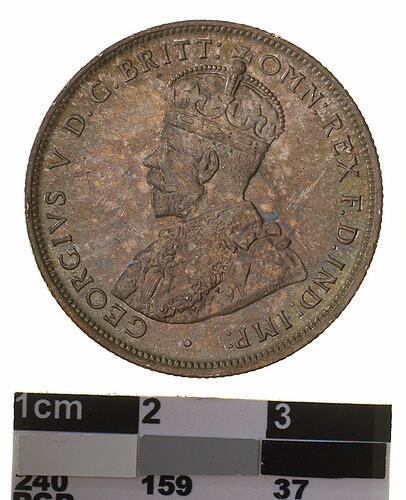
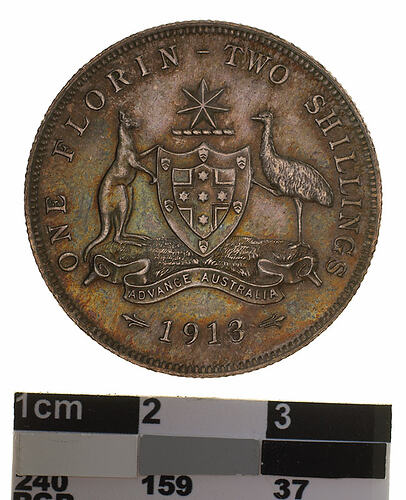
Coin - Florin (2 Shillings), Australia, 1913 circulating
Mintage
no-coin-dated-figure 1,200,000 pieces
No document names how many coins were struck bearing the date 1913. This counts what Royal Mint, London struck for Australia during report year 1913, which is a different quantity: Australia's early coin was made in England and India, and the reports state a report year rather than the date on the coin.
| Figure | Mint | What was counted | Source, and its own words |
|---|---|---|---|
| 1,200,000 | Royal Mint, London | struck-in-report-year what Royal Mint, London struck for Australia during report year 1913 |
Reports of the Deputy Master of the Royal Mint, Imperial and Colonial coinage appendices
Silver— Florins 1,200,000 120,000 120,000 £120,000 x 10 coins per pound |
What this page does not tell you
It does not tell you what the coin is worth. A catalogue can honestly report how many were struck, what metal is in one, and what the documents say. It cannot report a market price without either inventing it or copying someone who might have. So this catalogue reports the first three and stays quiet about the fourth.