1944 sixpence
au-sixpence-1944
A coin of this date, photographed
Museums Victoria holds one of these and photographs each one, which is a documented proof that a coin bearing this date exists. It says nothing about how many were struck, and is not counted as a mintage anywhere here.
What they hold: circulating.
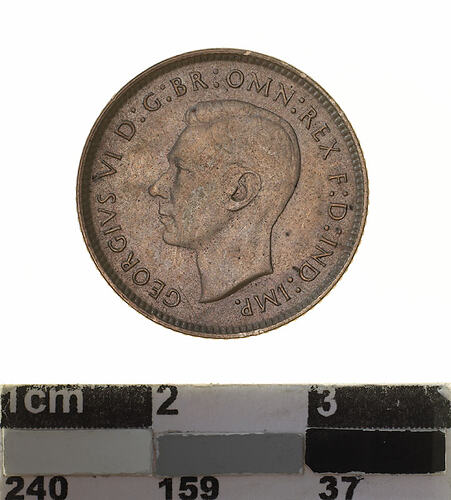
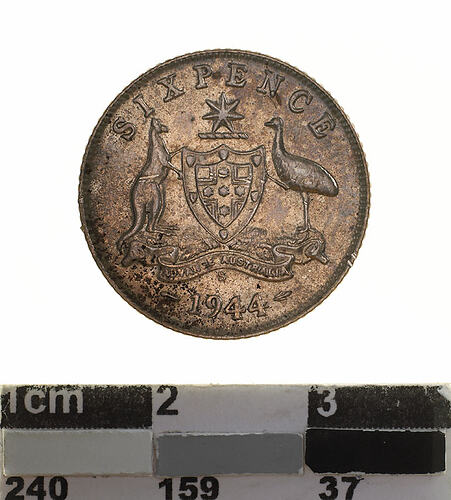
Coin - Sixpence, Australia, 1944 circulating
Mintage
no-coin-dated-figure 7,440,000 pieces
No document names how many coins were struck bearing the date 1944. These are report-year figures, counted as issued, and a coin dated 1944 was drawn from deliveries like these. Treating one of them as the mintage of a 1944 coin is what most published figures do, and it is the conflation this catalogue exists to document: the reports themselves record dates carrying over from one report year into the next.
| Figure | Mint | What was counted | Source, and its own words |
|---|---|---|---|
| 7,440,000 | not stated | issued what the Commonwealth Treasury issued across the whole of Australia during 1944 |
Reports of the Deputy Master of the Royal Mint, Australian branch memoranda and appendices
Issues Branch Issues Silver £A £A Florins 3,258,000 2,158,000 Shillings 667,000 517,000 Sixpences ... ... ... 186,000 — Threepences ... ... ... 589,900 37,400 Bronze Pence 136,290 16,690 Halfpence ... ... ... 19,800 19,800 4,856,990 2,748,8 £186,000 x 40 coins per pound |
What can be said instead
No document names a figure for coins dated 1944. The reports do say what the branch mints delivered in the report years around it, and a coin of this date had to come from one of those deliveries.
| Report year | As the report prints it | In pieces | Mint |
|---|---|---|---|
| 1945 | 252,400; £252,400 | 20,192,000 | unstated, Melbourne |
So at most 20,192,000 pieces can bear the date 1944, if Coins dated 1944 were struck in report year 1944 or 1945.
The reports describe dates lagging by a year, but not always by only one: the 1939 report records that Melbourne went on using 1936 dies throughout 1937. Where a date persisted, the true figure can exceed this ceiling.
What this page does not tell you
It does not tell you what the coin is worth. A catalogue can honestly report how many were struck, what metal is in one, and what the documents say. It cannot report a market price without either inventing it or copying someone who might have. So this catalogue reports the first three and stays quiet about the fourth.