1966 ten cents
An impression of a lyrebird designed and sculpted by Stuart Devlin
au-ten-cents-1966
A coin of this date, photographed
Museums Victoria holds 2 of these and photographs each one, which is a documented proof that a coin bearing this date exists. It says nothing about how many were struck, and is not counted as a mintage anywhere here.
What they hold: circulating.
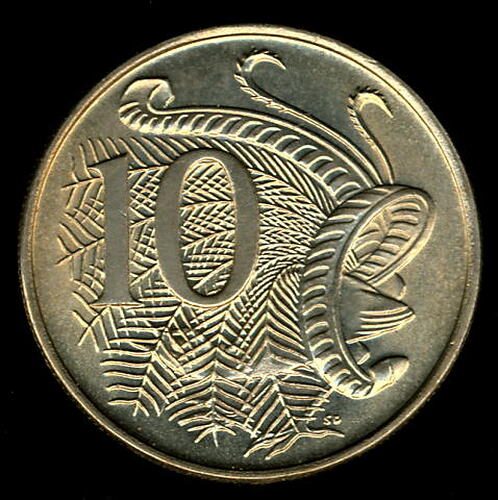
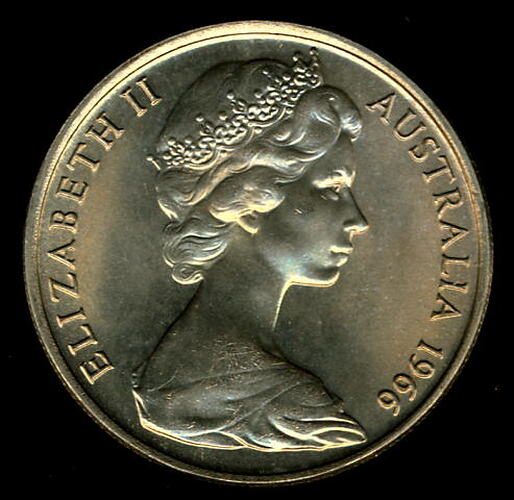
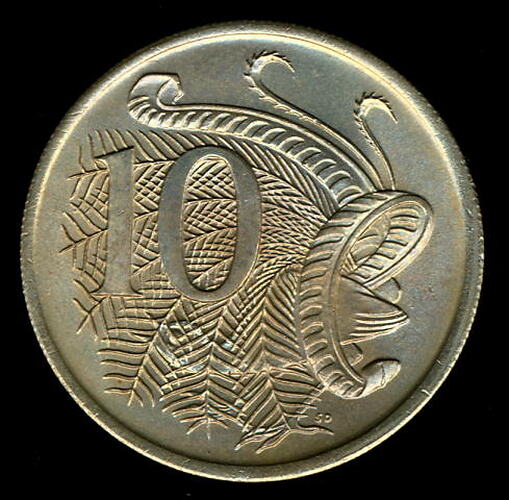
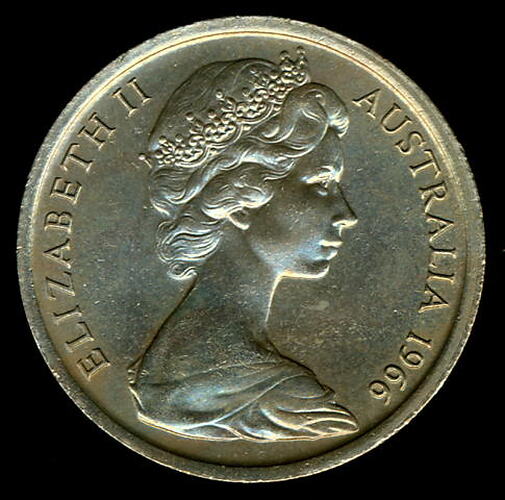
Coin - 10 Cents, Australia, 1966 circulating
Coin - 10 Cents, Australia, 1966 circulating
Mintage
summed-from-components 41,000,000 pieces
Published as 2 separate mint figures for this year; the total is their sum. Published in millions, so the figure is precise to +/- 50000 pieces, not to the unit.
| Figure | Mint | What was counted | Source, and its own words |
|---|---|---|---|
| 11,000,000 | RAM | final-mintage-as-published±50,000 | Royal Australian Mint, circulating coins: ten cents (Mintage Figures)
1966 | 11.0 | RAM |
| 30,000,000 | RML | final-mintage-as-published±50,000 | Royal Australian Mint, circulating coins: ten cents (Mintage Figures)
1966 | 30.0 | RML |
Varieties recorded for this coin
A variety is a claim about a coin, and claims differ in how well they are evidenced. The grade beside each says what kind of source stands behind it. This catalogue prints no valuations, so nothing here tells you what a variety is worth.
| Variety | How you tell it apart | Evidence | Source |
|---|---|---|---|
| 1966 10c rotated die | Obverse/reverse rotation across almost a full clock face | scholarly
a numismatic society, museum catalogue or archival study |
source |
What this page does not tell you
It does not tell you what the coin is worth. A catalogue can honestly report how many were struck, what metal is in one, and what the documents say. It cannot report a market price without either inventing it or copying someone who might have. So this catalogue reports the first three and stays quiet about the fourth.