1952 threepence
au-threepence-1952
A coin of this date, photographed
Museums Victoria holds 4 of these and photographs each one, which is a documented proof that a coin bearing this date exists. It says nothing about how many were struck, and is not counted as a mintage anywhere here.
What they hold: circulating, proof.
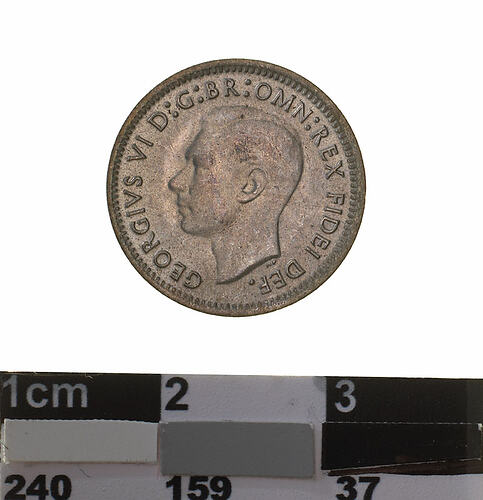
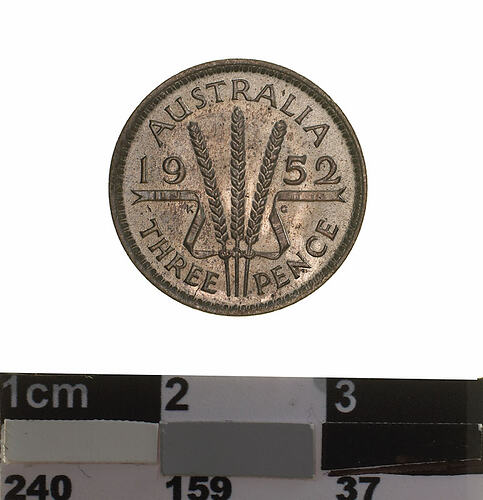
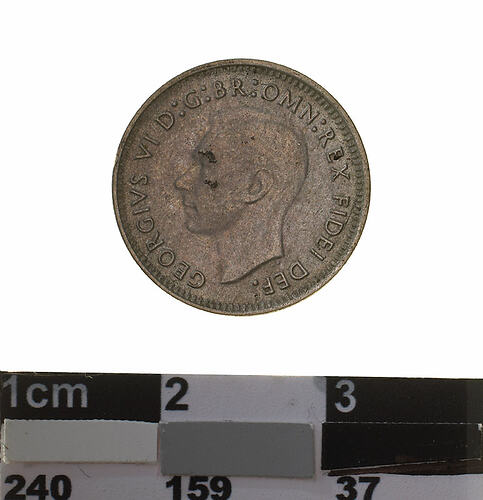
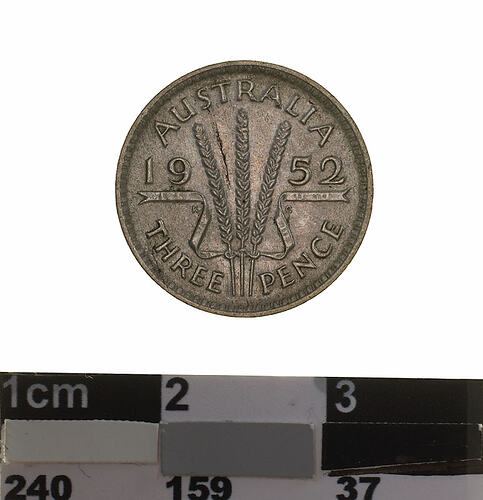
Coin - Threepence, Australia, 1952 circulating
Coin - Threepence, Australia, 1952 circulating
Proof Coin - Threepence, Australia, 1952 proof
Proof Coin - Threepence, Australia, 1952 proof
Mintage
single-source 8,864,000 pieces
One of the few figures the Royal Mint's reports tie to the date borne by the coin rather than to a report year.
| Figure | Mint | What was counted | Source, and its own words |
|---|---|---|---|
| 8,864,000 | Melbourne | struck-dated | Reports of the Deputy Master and Comptroller of the Royal Mint, Australian branch sections
The coin issued until the 7th May, namely £110,800 Of threepences and |
The date these coins bore
Almost every figure in any coin catalogue counts a report year. This one does not: the Mint stated, in prose, which date the coins carried. That is what a collector means by a mintage, and it is recorded almost nowhere.
The report states the date these coins BORE, which is what a collector means by a mintage and what almost no source records. But it is a PART of one report year's delivery, not the whole coinage of 1952: the same report says the remainder carried a different date. Coins of this date struck in other years are not included here.
| Pieces | Mint | What it covers | The report's own words |
|---|---|---|---|
| 8,864,000 | Melbourne | part of a year | the reportThe coin issued until the 7th May, namely £110,800 Of threepences and £60,230 of pence, were dated 1952. £110,800 x 80 coins per pound |
What this page does not tell you
It does not tell you what the coin is worth. A catalogue can honestly report how many were struck, what metal is in one, and what the documents say. It cannot report a market price without either inventing it or copying someone who might have. So this catalogue reports the first three and stays quiet about the fourth.