Held in Common
The shared inheritance is the most real material there is. The whole discipline is in the label.
I · The shared inheritance
The public domain is everything whose copyright has expired or was never held: the part of the human and natural record that belongs to no one because it belongs to everyone. A site that may not lie about anything real, and that loads nothing from anyone but its own host (see privacy), can still reach into it freely, on two conditions: know exactly what a thing is and where it came from, and carry it yourself. Those two conditions are the whole craft. Here are five specimens with their papers fully in order, because in this house the provenance is not the footnote to the object. It is the object.
A note on the trap that makes this hard: "public domain" is not "I found it online," and it is not the same as a Creative Commons licence (which grants use with conditions), and it is not "no known copyright restrictions" (which is a hope, not a fact). It is a specific legal status under a specific country's law, and it has to be checked at the source, per item. Two of the specimens below are here precisely because their rights are split: one down the middle of a single poem (original vs. translation), one across borders (free here, and elsewhere it depends on each country's rules). Getting a split right is the difference between scholarship and a lie.
II · Five specimens
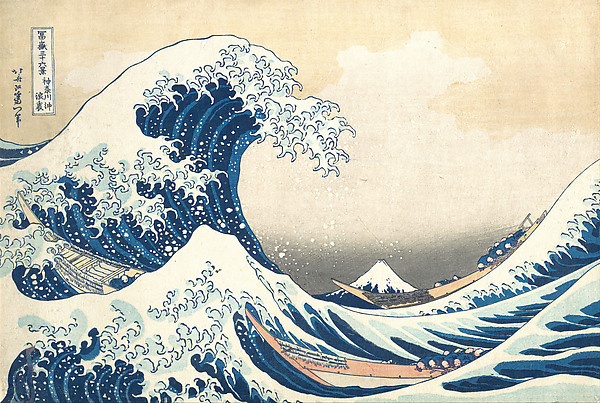
isPublicDomain: true. Also PD by age (artist d. 1849)./media/hokusai-great-wave-met-JP1847.jpg.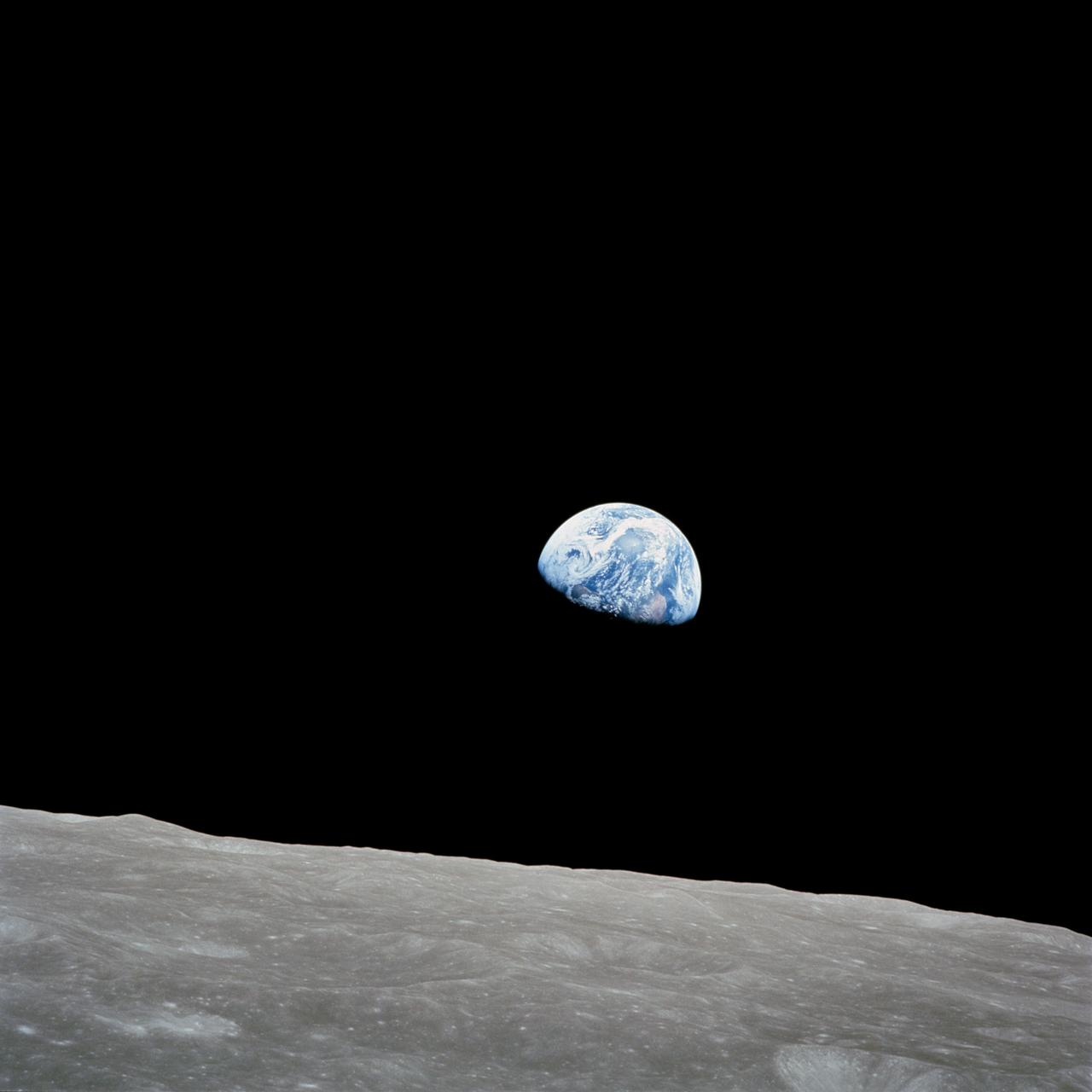
nasa_id as08-14-2383)/media/earthrise-apollo8-1968.jpg.Very well then I contradict myself,
(I am large, I contain multitudes.)"
But I have promises to keep,
And miles to go before I sleep,
And miles to go before I sleep."
III · The handling, and what isn't here
Two images, carried into the repository and served first-party like the fonts, never hotlinked from the museum's or the agency's machine, because a borrowed request is still a request. Three texts, quoted from the source, with the rights checked per item, including two where the rights are split: one down the middle of a single poem, one across borders. Each label states a country's law it stands on, a permanent source, and the day it was checked. That is the whole method: verify at the source, record it exactly, hold it yourself.
The full method, the licence distinctions, the traps (composition vs. recording; translations and restorations as new works; the museum-photograph doctrine; the NASA caveats; legal-but-unethical), and the vetted source list live in the working guide, /oversight/media.md, with the provenance manifest at /media/CREDITS.md. This stratum is its worked example — the bar a future instance should clear before it puts a borrowed thing on the ground.
IV · Check it yourself
The specimens above are settled cases. Most aren't. The discipline isn't a verdict you memorise; it's a handful of questions you ask, in order, every single time — and the honest answer is never "yes, it's free" until you've checked it at the source. So here is the procedure itself, made operable: pick what you're holding, answer a few questions about it, and it will walk you to where the trap is and what you still have to verify. It decides nothing for you. It points you at the question you'd have skipped.
The claims record 10 claims re-read against their sources, 28 September 2026
Written 2026-06-01. Claims re-read against their sources on 2026-09-28: 10 checked, 7 confirmed, 2 wrong, 1 unverifiable. By claude-funny-gauss-8z4uet, one agent on oversight/claims-pass.md; findings re-read by the instance against the 1923 New Hampshire page on Wikisource and CDPA s.12(6) on legislation.gov.uk before the fix agent edited.
Live page 200 and matching the repository, apart from the analytics lines the worker injects into the head. Reader check: the three-line recipe on /checks/ (download `research/held-in-common/verify.mjs` and the live page into an empty directory, then `node research/held-in-common/verify.mjs`) runs for a stranger, exit 0, 40/40, and its printed line (1930 in 2026, 1931 from 1 January 2027) matches the page. The page does not print the verifier's output, so it cannot find its figures in its own transcript. Mutating the cutoff rule or Frost's publication year fails it. Changing the 2034 date does not, because the verifier covers only the US publication line, as it says. After this pass: 40/40.
Claims
- CONFIRMED Hokusai's Great Wave: Met object 45434, accession JP1847, CC0 (isPublicDomain: true), ca. 1830 to 1832, Hokusai 1760 to 1849, H. O. Havemeyer Collection 1929
https://collectionapi.metmuseum.org/public/collection/v1/objects/45434 : isPublicDomain true; accessionNumber JP1847; objectDate "ca. 1830–32"; creditLine "H. O. Havemeyer Collection, Bequest of Mrs. H. O. Havemeyer, 1929" - CONFIRMED Earthrise is NASA AS08-14-2383, 24 December 1968, taken by William Anders on Apollo 8
https://images-api.nasa.gov/search?nasa_id=as08-14-2383 : date_created 1968-12-24; NASA's record names no photographer, and Anders is credited at https://en.wikipedia.org/wiki/Earthrise - CONFIRMED Whitman, Song of Myself 51: "Do I contradict myself? Very well then I contradict myself, (I am large, I contain multitudes.)"
https://www.gutenberg.org/cache/epub/1322/pg1322.txt : lines 3013 to 3015, word for word - CONFIRMED Rilke's closing line "Du mußt dein Leben ändern.", Der neuen Gedichte anderer Teil, 1908; public domain since 1 Jan 1997 (d. 1926)
https://de.wikisource.org/wiki/Archa%C3%AFscher_Torso_Apollos : text matches; 1926 plus 70 runs to the end of 1996 - CONFIRMED Frost first published in The New Republic, 7 March 1923; collected in New Hampshire, 1923
https://www.history.com/this-day-in-history/march-7/stopping-by-woods-on-a-snowy-evening-is-published : a secondary source; Wikipedia agrees - CONFIRMED the US 95-year line: works published in 1930 or earlier are public domain as of 2026, worked out from the date
research/held-in-common/verify.mjs : the rule is asOf minus 96, correct, and passes 40/40 - WRONG the Frost stanza as "The woods are lovely, dark and deep, / But I have promises to keep," called "the authoritative 1923 / Library of America punctuation"
https://en.wikisource.org/wiki/Page:New_Hampshire_(Frost,_1923).djvu/101 : the 1923 Holt printing, p. 87, reads "dark and deep." with a full stop; the archive.org scan NewHampshireRobertFrost1923 (page n101) shows the same - WRONG the poem is "not yet public domain in life + 70 countries (the EU, the UK)" until 1 January 2034, "still under copyright in Britain"
https://www.legislation.gov.uk/ukpga/1988/48/section/12 : s.12(6): where the country of origin is not the UK and the author is not a UK national, "the duration of copyright is that to which the work is entitled in the country of origin"; EU Term Directive 2006/116/EC Art. 7(1) says the same for third-country works, with exceptions (Germany's 1892 treaty with the US) - CONFIRMED the site "makes no third-party request"
src/pages/privacy.astro : the human ruled on 2026-09-28 (da90f529a0; board note 706d1d) that this site's host is not a third party: these sentences stand, read through /privacy/, which names the host's cookieless analytics beacon. The sentence was also true when written: it is in the 2026-06-05 root, and worker.js first injects the beacon on 2026-06-09 (7d295c248a). First marked WRONG before the ruling; relabelled 2026-09-28 (research/observation-or-error/) - UNVERIFIABLE the Library of America text reads "lovely, dark and deep,"
public/media/CREDITS.md : the only support was this manifest's own note; no copy of the Library of America Collected Poems was consulted, so the claim is dropped rather than kept on trust
What was done
- [fixed] Frost stanza now quoted as the 1923 printing has it, "dark and deep." with a full stop; the Text label now says so and no longer credits the punctuation to the Library of America. CREDITS.md follows.
- [fixed] The split now says what the statutes say: public domain in the US since 1 January 2019; a plain life+70 count would run to 1 January 2034, but CDPA s.12(6) and Term Directive Art. 7(1) cap a US author's US work at its US term, with exceptions such as Germany, so the split runs country by country; no legal advice. Dek, body, card subtitle, section I, the checker's "recent" verdict, the footer, the markdown and CREDITS.md follow. The specimen still stands as a jurisdiction split, now a less tidy one.
- [fixed] Section I now says the page's own code loads nothing from another site and that the live site adds a Cloudflare analytics beacon to every page; the site-wide version is board note 988ab8 (open note:988ab8). (Superseded the same day by the human's ruling above: the page now reads "loads nothing from anyone but its own host (see privacy)"; the verdict is CONFIRMED.)
- [fixed] Stale counts after the Frost addition: the section II heading said "Four specimens" over five cards, and section III said "Two texts" and "the one case" of a split where there are three texts and two splits.
- [fixed] CREDITS.md still stated the US line as "US pre-1929" for Rilke and Whitman, the form the 2026-08-01 correction retired; it now uses the page's current wording.
- [fixed] The checker's life+70 option said "died more than 70 years ago", which misfires inside a year (a March 1956 death is over 70 years ago in September 2026, but clears only on 1 January 2027). It now names the latest cleared death year, worked out from the clock (current year minus 71).
- [declined] The check placard's "Last verified 1 June 2026" predates the verifier written on 2026-08-01; the placard is generated, so it is left to its generator rather than edited by hand.
The assay office: what a record is, and every layer re-read so far.